
Tooth Ball RFQs: Confirm the Sound Feature
For a Tooth Ball order, ask the supplier to confirm whether the quoted version includes a sound feature, describe its intended operation, and link any demonstration to an identified sample. Jinxie’s catalogue places Tooth Ball in Squeaky Vinyl, but the purchasing answer should refer to the exact quoted version rather than the category alone.
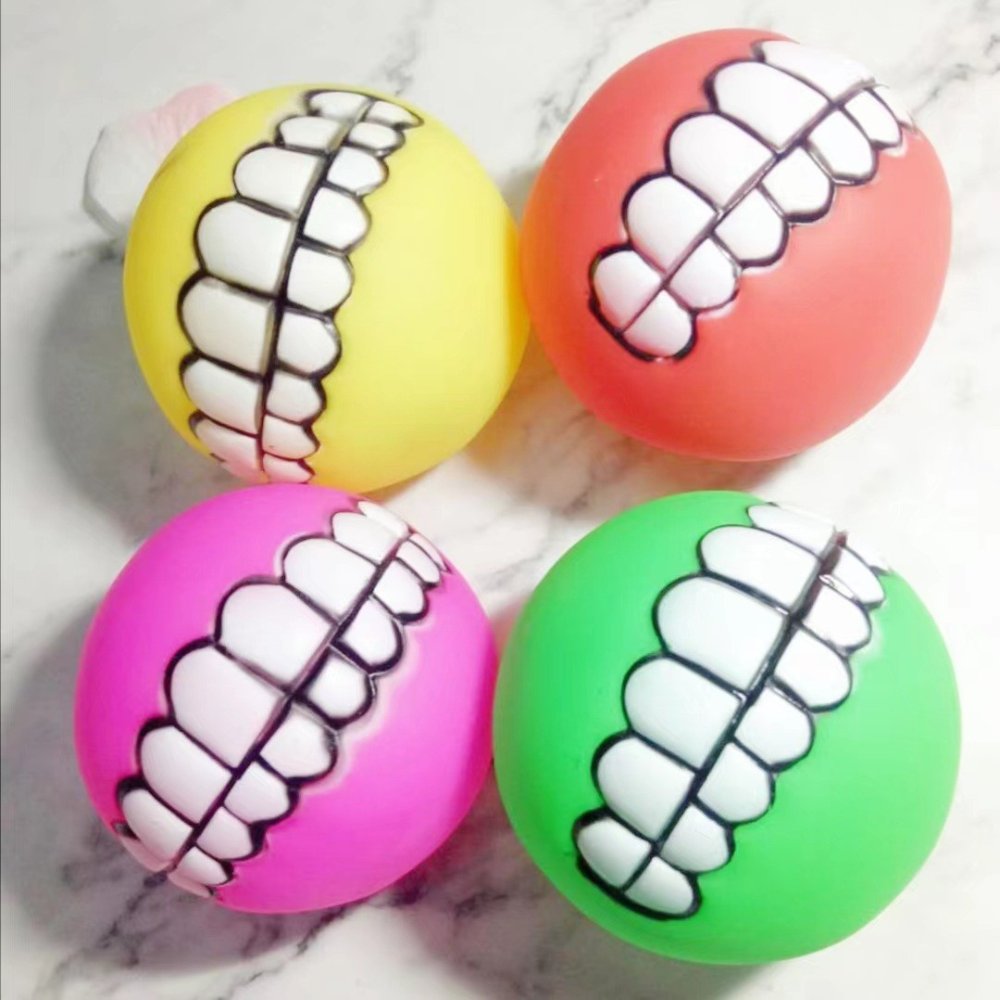
Tooth Ball catalogue appearance. The decorative graphic identifies the pictured design; a still image does not establish its sound operation or dental function.
Start with the model, then ask about sound
A buyer searching for wholesale squeaky vinyl may reach a product through a category whose name already suggests a function. The quotation still needs a direct answer about the selected item. Jinxie’s Tooth Ball listing appears under Squeaky Vinyl and gives nominal size and weight. Its visible product information does not describe how a sound feature operates. Treat that as a focused question for the supplier, rather than filling the gap from another toy’s description.
Copy the product name and page URL into the RFQ. Attach the selected catalogue image and ask which supplier model or version the quotation covers. The bright round forms and tooth-like graphic help identify the pictured design, but the graphic is an appearance cue. It supplies no basis for a dental benefit or a particular sound mechanism. Keep the functional question separate from those visual observations.
Write a response that the supplier can complete
Use a short feature schedule rather than an open request for a good-quality squeaky ball. Ask for a clear present, absent, or awaiting-confirmation answer for the quoted version. If the supplier offers alternatives, place each one on its own line. An empty field should stay open until answered; it should not silently become an included feature when purchasing staff prepare the order.
RFQ field
Requested supplier response
Buyer action
Quoted item
Tooth Ball model or version and quotation line
Match the answer to the selected image
Sound feature
Present, absent, or not yet confirmed
Resolve before approving functional copy
Intended operation
Supplier’s description and applicable instructions
Keep the original wording with the quote
Demonstrated sample
Sample identifier, recording date and conditions
Check that the sample matches the quoted version
Change control
Any difference from the sample or previous quotation
Request a revised feature answer
Football is a separate catalogue listing. This image does not identify a Tooth Ball component or a common sound mechanism.
Make a demonstration useful to purchasing
If a supplier provides a recording, ask for the item and sample identifier to appear with it. A short view of the complete sample before the demonstration helps the buyer connect the sound to the product being discussed. Request a description of the demonstrated action and any preparation used. Let the supplier explain the applicable procedure; do not invent an activation method from the product’s round shape.
Retain the original recording file or accessible reference, its date, and the accompanying supplier explanation. Playback equipment, distance and surrounding noise can affect what a viewer hears, so a video should not become an unsupported numerical sound specification. If the order requires an objective acoustic criterion, agree the criterion and method separately with the responsible parties. A purchasing record can identify what was shown without claiming that a demonstration establishes lifetime performance.
Keep the sound answer attached to the quote
The practical deliverable is one quotation line with a completed sound-feature response and a linked sample reference. Store those together. When a commercial revision changes the item code, a functional option, or the proposed sample, ask the supplier whether the earlier answer still applies. Do not carry the answer forward solely because the product name remains Tooth Ball or the new image looks similar.
Give purchasing and merchandising the same identified supplier response.
Mark unresolved function fields before confirming product descriptions.
Keep sample observations separate from contractual acceptance criteria.
Request clarification when a revised quotation changes the referenced item.
This approach also helps receiving staff. They can identify the agreed sample and the supplier’s instructions before deciding which checks belong in the receiving plan. The plan should describe an agreed process and responsibility, rather than introducing an improvised sound test on arrival. Any acceptance method belongs in the order documentation, with the supplier’s acknowledgement where needed.
Baseball is another separate catalogue product. Confirm any sound description against its own quoted model, rather than transferring a description between images.
Do not transfer a feature between catalogue neighbours
The Football and Baseball images here are separate catalogue references. Their different shapes make clear why a broad family label is not a complete model specification. If a buyer requests several designs, repeat the sound-feature field for each line. A demonstration of one design answers a question about that identified sample, not every neighbour in the category.
Keep material declarations, applicable warnings and other product documentation in their own fields. The sound response does not replace them. Equally, the decorative teeth on Tooth Ball should not become a claim about cleaning teeth or suitability for a particular pet. This article’s purchasing task is narrower: establish what the supplier is offering as the sound feature of the selected version, and preserve a usable reference for that answer.
Buyer questions
Does the Squeaky Vinyl category confirm the quoted function?
It identifies the supplier’s catalogue family. Ask for a model-specific answer covering the quoted version before using a functional description in an order or retail listing.
Can a photograph replace a sound demonstration?
A still photograph helps identify appearance. Ask for the supplier’s explanation and, when useful, an identified demonstration that addresses the sound question directly.
What should accompany a replacement sample?
Record its identifier and the quotation line it replaces. Ask whether the sound-feature answer and applicable instructions have changed, then update the reference used by the buying team.
Send the selected product URL and the outstanding feature questions through Jinxie’s contact page. The blog provides further catalogue context; the completed quotation and identified sample should answer this order’s specific sound question.
wholesale squeaky vinylTooth Ball RFQsample sound reference