
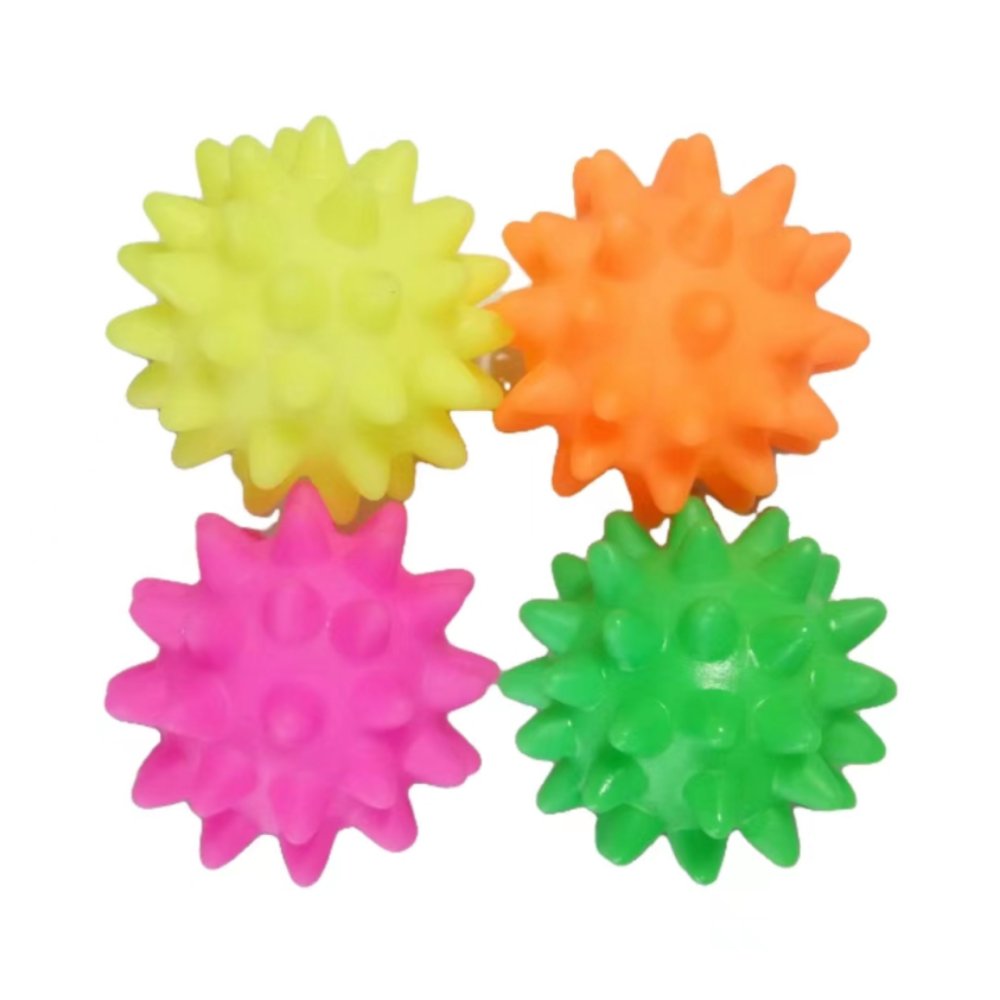
Pet Ball Colour Mixes: Define the Assortment
What should a pet-ball colour-assortment enquiry define? Ask whether the actual order line is supplied in buyer-selected colours or as a supplier-defined mix. Obtain the applicable colour references, allocation basis and substitution rules for the named toy. A catalogue colour count or a photograph containing several units does not establish the number in a pack or promise an equal mix.
Shooting Star Ball official appearance reference. The group illustrates colour choices, not a confirmed four-piece pack, equal ratio or current stock statement.
Separate a catalogue palette from the ordered assortment
Jinxie Toy lists Shooting Star Ball under its Squeaky Vinyl category. The product page includes a Colors: 4 field, and its official picture shows bright round forms with raised points. These references locate a colour-assortment enquiry without defining the commercial mix supplied for an order.
For wholesale squeaky vinyl pet toys, identify the named product and actual supplier offer before discussing colours. A catalogue count can describe the pictured range while leaving selection, allocation and packing unanswered. Ask which appearances are proposed for the particular quotation.
This purchasing task concerns the colour allocation of an order line. It is distinct from mapping a toy shape to its size, asking about a sound feature or requesting a material breakdown. Those records can share a product reference without answering how different colours will be supplied.
Buying field
Requested supplier response
Order identity
Named toy, supplier reference and applicable quotation revision.
Proposed palette
Supplier colour references linked to the actual offer.
Selection basis
Buyer-selected colours, a defined assortment or another stated method.
Allocation
Quantity or proportion proposed for each included colour.
Substitution
Whether changes are permitted and which response is required.
Pack relationship
How the colour schedule relates to the quoted supply unit.
Ask whether colours are selectable or assigned
Request a clear response on the available ordering method. The supplier may propose selected colour lines, a stated assortment or another arrangement. Keep the proposed method attached to the quotation rather than assuming that every visible colour can be ordered separately.
Where selected colours are proposed, identify each supplier reference and its corresponding quantity. Where an assortment is proposed, ask which references may appear and whether the allocation is defined. A response that simply says mixed colours may still leave important receiving questions unanswered.
Do not turn an unanswered choice into a buyer instruction that the supplier has accepted. Keep the request and the supplier confirmation distinct. The record should make clear which method is proposed and which version of the quotation the buyer is considering.
Tooth Ball is a separate official product reference. Its pictured colours do not establish the palette, quantities or assortment rules for Shooting Star Ball.
Keep the allocation attached to the exact toy
Tooth Ball is a separately named Jinxie catalogue product whose official image also shows several coloured forms. Its pictured appearances do not define the Shooting Star Ball palette or prove that the two toy designs share an assortment arrangement.
If several products are ordered, give each product its own colour-allocation rows. Keep the product identity, colour reference and quantity together. A supplier response about one line should not silently apply to another shape, surface design or catalogue family.
Where the buyer requests a combined display or another mixed-product presentation, state that as a separate proposed supply task. Ask which products and colours would be included and how the units would be identified. The photographs do not establish an existing retail set.
Distinguish a colour count from a pack quantity
A field stating the number of colours is not a statement about how many toys arrive in one commercial unit. Ask what the quoted unit represents and then connect the colour schedule to that unit. Do not infer a four-piece pack because four appearances are pictured together.
Where a fixed allocation is proposed, retain the supplier quantities or proportions for the actual offer. Where a variable assortment is proposed, ask the supplier to define its scope. A variable mix should not be recorded as a guaranteed equal split without an explicit response.
Keep any carton or inner-pack information separately identified. The same palette can be presented in different packing arrangements, and a packing quantity does not by itself explain colour allocation. This article supplies no pack count or approved order ratio for the catalogue toys.
Baseball is another separately named catalogue product. A single pictured appearance does not establish single-colour-only supply or a shared assortment with other toys.
Clarify references and changes before acceptance
The separately listed Baseball product is pictured in an orange appearance. That single image does not prove that only one colour can be supplied, nor does it establish a shared palette with another toy. Ask for the supplier colour references applicable to the actual proposal.
Use a reference image or identified sample to connect a supplier colour name to the intended appearance. Keep the reference linked to the product and quotation. A display image is useful for locating a question without becoming a measured colour standard or a future shipment inspection result.
Ask whether substitutions are permitted if the proposed assortment changes. Record the affected colour reference and the buyer decision for a revised offer. Preserve the earlier schedule so another buyer can understand what changed instead of relying on a general note that colours may vary.
Retain a usable assortment schedule
Keep the accepted product identities, proposed colour references, selection method, allocation and substitution response with the quotation revision. Receiving staff should be able to understand what was proposed without reconstructing the order from a gallery image.
Where the supplier sends a sample assortment, identify the sample and the commercial scope it represents. Record what was actually observed while keeping it separate from an uninspected shipment. An assortment schedule clarifies the supply proposal; it does not establish pet suitability, durability, sound performance or product certification.
Buyer FAQ
Does Colors: 4 mean four toys are supplied?
The catalogue field identifies a colour count, not a confirmed pack quantity. Ask for the actual supply unit.
Does a mixed-colour offer guarantee equal quantities?
An equal allocation requires an explicit supplier response. Ask how a proposed mix is defined.
Can one colour schedule cover several toy designs?
Only where its applicability is confirmed. Keep each product identity and colour allocation separately visible.
Does a single-colour photograph limit the available palette?
The photograph shows one appearance. Ask what the actual quotation proposes.
What should accompany a changed assortment?
Identify the affected references, revised allocation and buyer decision, preserving the earlier proposal.
Use the Shooting Star Ball catalogue reference, request a product-specific colour schedule, and read the toy purchasing blog for related procurement questions.
Separate palette information from the supplied assortment.
Connect colour allocation to the named product and unit.
Record substitution rules with the accepted revision.
wholesale squeaky vinylB2B supplier sample record